
Eating for Empathy: Food Habits that Strengthen Social Resilience
Evidence increasingly supports that what we eat can influence not only physical health, but also psychological resilience, including how well we recover from stress.
By Featured Writer, Biba Rey.
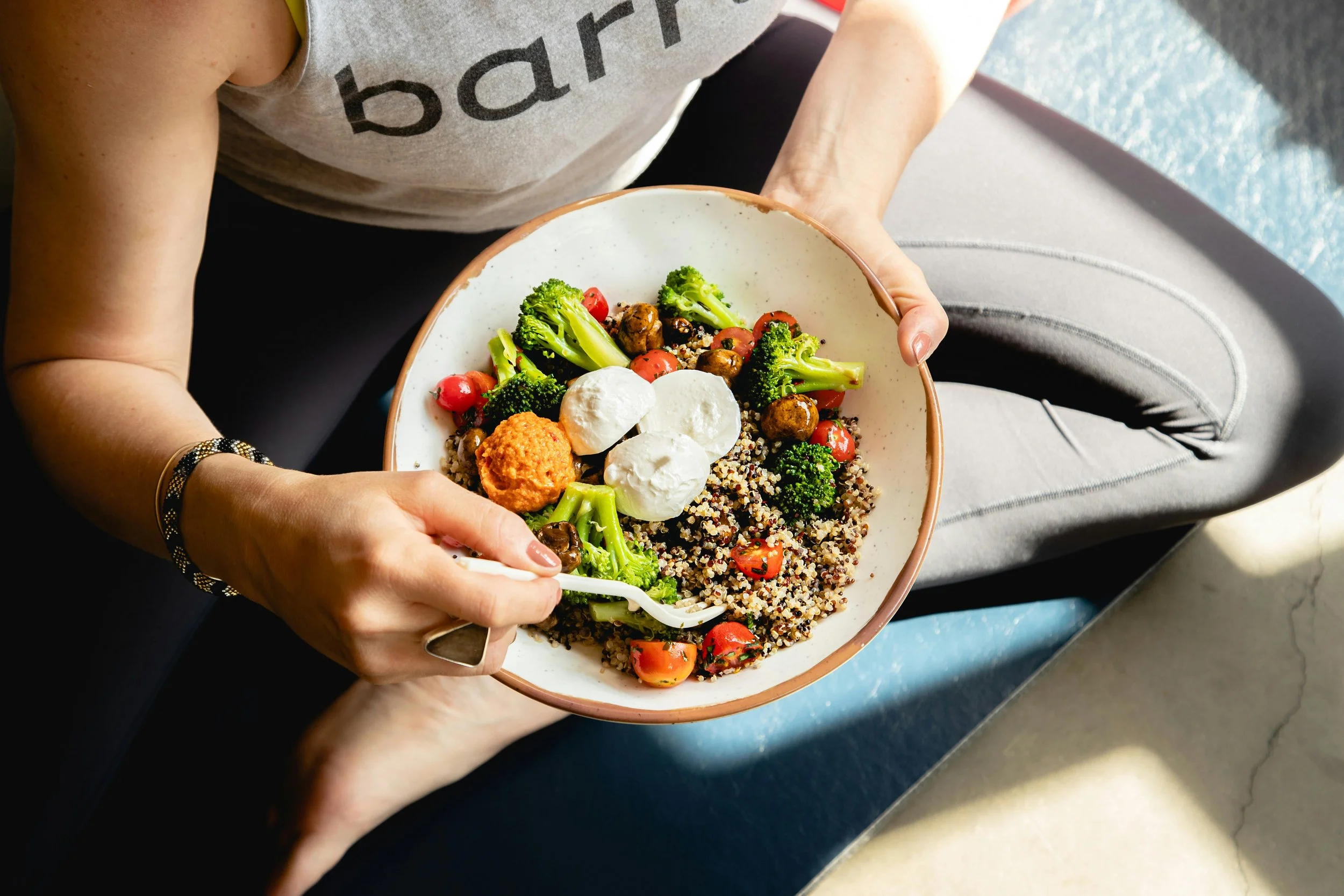
What if the food on your plate did not just nourish your body, but also your capacity to connect, to soften, to listen, and to meet emotional storms with steadiness?
Most health advice focuses on eat this, avoid that. What if we looked at food as relational work, eating to ground ourselves in community, to support emotional resilience, and to show up better for others?
This article explores how the microbiome, mood, and social connection intertwine, and how small dietary choices can quietly strengthen empathy and belonging.
The Gut Brain Mood Connection
Your gut and brain are in constant conversation. The microbiome gut-brain axis describes how microbes in your digestive system send signals through neural, hormonal, and immune pathways that can influence mood, stress, and cognition (Clapp et al., 2017; Appleton, 2018).
When this balance is disrupted, known as ‘dysbiosis’, research links it with anxiety and depression. Supporting gut health through nutrition can help stabilise mood and emotional regulation (Martin, 2023).
A growing body of research also suggests that dietary patterns rich in fibre and other microbiome-supporting foods can influence emotional behaviour by supporting microbial balance and gut-brain signalling (Appleton, 2018; Martin, 2023). This connection highlights that nourishment is not only physical, it can also shape how we feel and how we relate.
Diet Quality and Emotional Resilience
Evidence increasingly supports that what we eat can influence not only physical health, but also psychological resilience, including how well we recover from stress.
Stanford Medicine summarises how gut-brain connections are relevant across multiple conditions, including anxiety, and outlines how immune and neural pathways help link gut changes to brain and mood outcomes (Stanford Medicine, 2025).
In real-life terms, this suggests a feedback loop:
Food choices influence the microbiome;
The microbiome influences stress responses;
Stress responses influence emotional steadiness and social engagement
That does not mean food replaces therapy, social support, or medical care. It means food can be one steady, practical lever that supports the foundation you build everything else on.
Feeding the Microbes That Feed You
While food is no replacement for therapy, studies show that specific eating patterns can alter measurable microbial and metabolic outcomes linked to health and well-being (Martin, 2023).
For example, time-restricted eating, often described as eating within a consistent daily window, has been studied for its effects on metabolic outcomes and gut microbiome profiles (Zeb et al., 2023). More recent trial evidence suggests time-restricted eating and a healthy low-carbohydrate dietary pattern can each influence weight and gut microbiome outcomes beyond calorie restriction alone (Li et al., 2024).
Meal timing is not a magic fix. Still, this research supports a simple takeaway.
When you eat, not only what you eat, can influence your internal regulation systems.

Practical Habits for Relational Resilience
These habits are small on purpose. They are designed to be realistic, repeatable, and supportive rather than perfection-driven.
Add fermented or probiotic foods
Fermented foods can introduce beneficial microbes and support gut-brain signalling pathways (Clapp et al., 2017).
Start small with yoghurt, kefir, miso, or sauerkraut a few times a week. Vegan options offer great support too!Boost dietary fibre and prebiotic foods
Fibre helps feed gut microbes and supports microbial diversity, which is commonly discussed as a marker of resilience in microbiome research (Martin, 2023).
Add legumes, oats, onions, garlic, leeks, and whole grains consistently.Limit ultra-processed foods and refined sugar
Diets high in ultra-processed foods are commonly discussed in the microbiome literature as a factor that can reduce microbial diversity and worsen overall health patterns (Martin, 2023).
Try swapping one processed item each week for a whole food alternative you genuinely like.Try time-restricted eating gently
Evidence suggests time-restricted eating can influence gut microbiota and metabolic markers, though effects vary by person and study design (Zeb et al., 2023).
Try an 8 to 10 hour eating window a few days a week, for example, 10 a.m. to 6 p.m.Experiment with intermittent fasting carefully
A systematic review of human studies suggests intermittent fasting can alter gut microbiota richness, diversity, and composition, though the evidence is mixed and mechanisms remain under investigation (Paukkonen et al., 2024). Another systematic review suggests effects may vary by phenotype and baseline metabolic health (Pramono et al., 2024).
If you try fasting, keep it gentle. Start by extending the overnight gap between dinner and breakfast.Cook and eat with others when you can
Shared meals can support connection and social regulation. This matters because stress regulation is not only internal, it is relational too (Appleton, 2018).
Plan one shared meal a week, even if it is simple.
Pitfalls and Caveats
The gut microbiome is highly individual. What supports one person may not support another;
Many studies are short-term. Findings are promising, but not final;
Food should not become moralised or competitive. It is support, not a scoreboard;
Diet is one part of resilience. Sleep, movement, and safe relationships matter just as much.
Invitation
For the next four to six weeks:
Choose one new food habit, fermented foods, fibre, shared meals, or a consistent eating window;
Keep a short journal on how you feel physically, emotionally, and socially;
Look for small shifts, steadier energy, softer reactivity, and easier connection
Take the Empathy Quiz
Curious how empathic you tend to be right now? Take the ‘Empathy Quiz’ from the Greater Good Science Center, linked below.
It draws from scientifically validated empathy scales and offers a simple snapshot of everyday empathic responses and social awareness (Greater Good Science Center, no date).
Quiz link:
https://greatergood.berkeley.edu/quizzes/take_quiz/empathy
A Word of Caution:
These suggestions are for general well-being only and are not a substitute for medical or psychological care. If you have ongoing health concerns, consult a qualified healthcare professional before making significant dietary or lifestyle changes.
References
Appleton, J. (2018). ‘The gut-brain axis: influence of microbiota on mood and mental health’, Integrative Medicine (Encinitas), 17(4), pp. 28–32. Available at: https://pmc.ncbi.nlm.nih.gov/articles/PMC6469458/ (Accessed: 6 February 2026)
Clapp, M., Aurora, N., Herrera, L., Bhatia, M., Wilen, E. and Wakefield, S. (2017). ‘Gut microbiota’s effect on mental health: the gut-brain axis’, Clinics and Practice, 7(4), p. 987. doi: https://doi.org/10.4081/cp.2017.987
Greater Good Science Center (no date). Empathy Quiz. Available at: https://greatergood.berkeley.edu/quizzes/take_quiz/empathy (Accessed: 6 February 2026)
Li, L., Li, R., Tian, Q., Luo, Y., Li, R., Lin, X., Ou, Y., Guo, T., Chen, X., Pan, A., Manson, J.E. and Liu, G. (2024). ‘Effects of healthy low carbohydrate diet and time restricted eating on weight and gut microbiome in adults with overweight or obesity: Feeding RCT’, Cell Reports Medicine, 5(11), 101801. doi: https://doi.org/10.1016/j.xcrm.2024.101801
Martin, C.R. (2023). ‘The role of diet on the gut microbiome, mood, and happiness’, Nutrients, 15(5), 1168. doi: https://doi.org/10.3390/nu15051168
Paukkonen, L., Koivuniemi, E. and Tikka, S. (2024). ‘The impact of intermittent fasting on gut microbiota: a systematic review of human studies’, Frontiers in Nutrition, 11, 1342787. doi: https://doi.org/10.3389/fnut.2024.1342787
Pramono, A., Nurkolis, F., Yulianti, A.B., Sari, D.R., Mayulu, N., Shatri, H., Fitri, I., Li, Z. and Rasyid, H. (2024). ‘Intermittent fasting modulates human gut microbiota diversity in a phenotype dependent manner: a systematic review’, Bioscience of Microbiota, Food and Health, 43(2), pp. 49–66. Available at: https://pmc.ncbi.nlm.nih.gov/articles/PMC11220331/ (Accessed: 6 February 2026)
Stanford Medicine (2025). The gut-brain connection: long COVID, anxiety and Parkinson’s. Available at: https://med.stanford.edu/news/insights/2025/03/gut-brain-connection-long-covid-anxiety-parkinsons.html (Accessed: 6 February 2026)
Zeb, F., Wu, X., Chen, L., Feng, Q., Li, M. and Chen, A. (2023). ‘Gut microbiota and time-restricted feeding: a targeted biomarker and approach in precision nutrition’, Nutrients, 15(2), 259. doi: https://doi.org/10.3390/nu15020259