
Bringing The Black Dog To Heel

Sometimes, it feels like I don’t want to live — not that I’m actively planning to die, but that the business of eating and breathing feels like way too much effort.
By Featured Writer, J E Rudd.
I guess I didn’t suffer from depression as a small child - the memories are too vague. But I was certainly not a happy-go-lucky kid. Perhaps being a “Wednesday’s Child”, I was full of woe, and maybe starting my periods early was part of it - but I definitely had the blues from my pre-teen years onwards. The Black Dog, as Winston Churchill famously dubbed the condition, has skulked around me ever since, sometimes snarling at passers-by but mostly just whining in the shadows, waiting to be let off the leash.
People who have never suffered from depression think it’s just extreme sadness, but it’s on another level. Depression, for me, is like a sort of brain fog, where everything is murky. All the news, if you dare listen to it, is bad - whether it’s another war, climate crisis, or just a bad football result, it's easy to feel as though the future is bleak. Problems, which on other days would just be ticked off a list, become such insurmountable hurdles that I don’t even know where to start. Sometimes, it feels like I don’t want to live, not that I’m actively planning to die, but that the business of eating and breathing feels like way too much effort, and I hope I won’t wake up in the morning.
In moments like this, I genuinely feel that way - I’m not waving a flag to say notice me!, rather I just want to disappear. I’ve managed to get through it in the past, sometimes with intervention, mostly through my own bloody-mindedness. Recently, it has reared its ugly head again, but I can see it for what it is and bring it to bear a little. I can’t pretend to be an expert, other than having suffered from depression on and off for 50 years, and I’m definitely not cured, but here are a few of my coping tips.
Roll over & play dead
Sometimes you need a duvet day. If everything seems too much, then it’s ok to just hide under your blanket for a little while - although it’s important not to do this for too long.
Many years ago, I had 18 months off work where I just couldn’t make the effort. I’d promise myself that tomorrow I would do better, but tomorrow never seemed to be the day where I could motivate myself, and I was aided and abetted by being with someone who had no stake in my recovery but wanted me at home with them.
I’m now in a position where if I don’t get up in the morning, no one else is going to light the fire for me, cook my dinner or even make a cup of tea. Having a pet that is reliant on you is good motivation for making the effort to get out of bed, even if only for a few minutes. My cats have saved me from spiralling deeper and deeper into depression on more than one occasion.
So, if you need some time to pull up the drawbridge and hibernate, by all means do it (sometimes it's necessary!), but don’t make that cocoon your home. You will find it harder - and maybe scarier - to shed yourself free from it later.
Go walkies
Going outside is a good thing to do.
It doesn’t have to be a 10 mile hike in the countryside - a trip to the shops or a stroll along the canal bank can be just as good. Exercise produces dopamine and lifts our serotonin levels, which helps us feel happy. We need fresh air to reinvigorate ourselves; even if it’s cold or damp, it enlivens us and makes our brains click back into gear again.
Getting enough sunlight also has an impact on mood, and I’m convinced that everyone suffers from ‘Seasonal Affective Disorder’ (SAD) at least a little. I’m fortunate that my job is outside, so I nearly always get enough sunlight, even on winter days, but that doesn’t mean to say that grey days don’t make me feel gloomy.
If you are lucky enough to live somewhere where there is wildlife, then this in itself can be uplifting. In the winter, I often spot kingfishers; their bright colours stand out better against dull foliage, and the sight is one to gladden the heart.
So leash up.
Feeding time
Food is important.
Depression can make some people eat more, constantly crave unhealthy snacks, or it can make us feel like we don’t want to bother at all and neglect ourselves.
Being obese was a big part of my depression as a teenager, and comfort eating was something I did a lot of, thus finding myself in a worsening spiral. Depression can easily lead to the intake of more processed foods, which contain additives that affect our health. Junk food is full of addictive sugars and makes us feel temporarily full without actually providing much benefit, so that we crave more of it later; fuelling addiction or dependency during stressful times.
Instead, by eating good, healthy food, we improve our physical health, which makes us more able to deal with stress. Cooking can therefore be very therapeutic, and it doesn’t have to be a complicated recipe, even making something simple can be fun, and what could be more wholesome and comforting than a bowl of homemade soup?
Plan your meals, eat regularly and eat healthy.
Work…
Sometimes work can be the cause of depression, as I know too well.
Work doesn’t have to be a job or a career, though. Having a task that needs to be completed can help you to stay focused and motivated. I find deadlines helpful, and I try to deal with things as they need doing so that I don’t find myself with a massive list of chores. On bad days, feeding the cat and brushing my teeth might be as good as it gets, but most days, I am a flurry of activity, finishing my day’s work and then doing half a dozen things at home and not sitting down to relax until half an hour before bed.
Being busy doesn’t give me time to think dark thoughts, so if I am always doing something, I don’t have time to be depressed. But this can be a bad strategy if taken too far, because when it catches up with you, you can fall deeper.
Consider what brings you a sense of purpose and focus, in a way that “fills you up” rather than pours you back out.
Rest…
Insomnia is something that can plague depressives.
We lie awake riddled with anxieties, replaying scenarios that could have happened differently, or imagining how tomorrow’s events might play out (spoiler: they rarely coincide with real life).
If you are physically tired from working or going for a walk, the chances are you will sleep better. Eat at least an hour and a half before bed, so that you have had time to digest your food, and make sure your bed is cosy.
It’s best to pace yourself. So make sure you have some wind-down time in the evenings and read a book or listen to relaxing music so that your brain is still engaged, but you aren’t full of adrenaline at bedtime. Do breathing exercises or even count sheep, but make sure you try to relax without thinking about anything, if you can.
Create a space of safety and comfort you can truly sink into, that feels reflective of what you really need and enjoy.
And play
Relaxation is more than just sleeping.
It is a good idea to have something to look forward to, so that you don’t get trapped in the cycle of day to day repetition. Meet up with friends, go to the cinema, anything, just plan it ahead so that you have a positive thought in your head.
I’ve had some of my best times at festivals where there’s a sense of extended family and some good music. I’m not always the life and soul of the party, but just enjoying good company counts for an awful lot. Music speaks to our souls in ways I can’t begin to explain. It can be gloomy or uplifting, and sometimes even sad music can bring emotions to the forefront, allowing us to open ourselves to what we are truly feeling. Most people are probably more likely to find themselves singing along to a favourite track; if this happens, there’s a good chance that the Dog has at least retreated as far as the kennel.
What allows you to connect with spontaneity, fun, novelty, and your Free Child state?
Become part of the pack
There’s a lot of truth in the adage that “a problem shared is a problem halved”.
If you can talk to people about what you are going through, it helps. Maybe they don’t really understand, but at least they are aware of your pain. Often, I’ve reached out to people only to find they are going through a whole heap of stuff too, and worrying on their behalf can take your mind off your own problems.
Speaking to a stranger, or at least someone who isn’t a friend, can help too, and counselling is a good option in a lot of cases.
Who could you connect with and how, that would ideally hold meaning or offer something to your black dog?
Learn new tricks
Do something creative; it really doesn’t matter what it is or if you are good or bad at it.
If you can paint or draw, it can help you rally your thoughts, although when I’m doing art, I like to listen to biographies and other talk podcasts as it seems to keep both hemispheres of my brain active. Writing is a good way to get your feelings out, I like to write a journal, but sometimes poetry can serve as a strong medium for expressing yourself.
Even if it’s rubbish, just trying to put thoughts on paper can help. You might not be artistic, but learning a new skill like a language might be a way to make you be able to say “I did that” and have a little more pride in yourself. If you aren’t feeling able to do any of that, read a good book. We can learn a huge amount from books, both fiction and non-fiction. An engaging book can take you out of yourself and into another world, far more than TV or film can, although this can work to a lesser degree. Books allow us to get inside another character’s head, perhaps drawing comfort from them facing similar problems to us, or maybe dealing with something else entirely.
What could you turn your hand to that would expand you or free you in some way? How could you encourage your Black Dog to “get lost” by allowing yourself to do exactly that?
Show them your bark is worse
There have been times when the only way I could move forward was to transfer my pain into anger.
It’s not something to be recommended all the time, but once in a while, you can growl at the world and make it take a step back to give yourself breathing room. It’s best not to take it out on others, of course, but if you can use some adrenaline-driven energy to make yourself get out of bed and do the dishes, that’s a good step. To hell if you decide to smash at least one plate, if it gets the rest done.
Anger is often about injustice - how would it feel to let yourself say the truth you are holding in, and to hear yourself really say it?
What needs to leave your body? Is it verbal or physical?
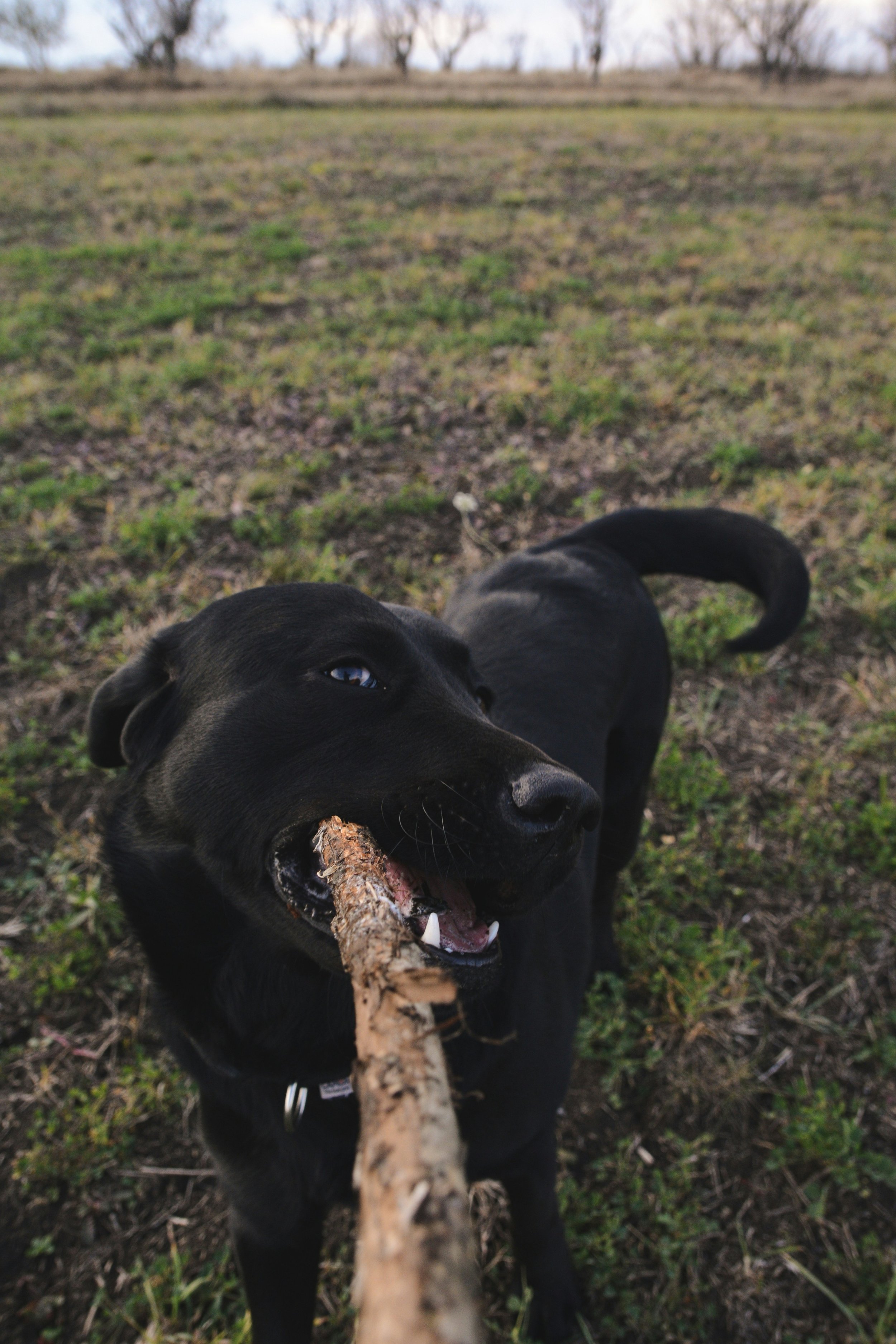
Life in the old dog yet
I doubt that I’ll ever have the Black Dog rolling over for its belly to be tickled.
Depression isn’t something that “just goes”. But as I’ve gotten older, the bouts get less frequent and less intense, although it can still come back and bite you on the bum when you aren’t expecting it. Knowing that you got through this before, and you can do so again, does help.
I’ve been told often that I’m a strong woman, but sometimes I want to be the person who breaks down and cries, and we all need to do that too. I’ve tried to avoid medication most of my life, because I always found it just dulled all my senses, but counselling did help in my worst case. Quite probably, many depressives are people who feel emotion more deeply. Depression is about emotion, and if you can express those emotions in other ways, you can go forward. Opening up to what your emotions are, through being creative or passionate about something (even if it’s something that makes you shout), helps you focus emotions so that you level off and don’t plunge so deeply into the hole. Life is hard, sometimes it’s a lot harder than it seems fair, which is probably why I’ll always be a cat person!
It takes time and “know-how” to train a dog - especially the Black Dog. So, when you can’t find the answers, turn to experts who can offer something more. Help is available, and change becomes possible once you have the space to see it and the capacity to then seize it. Hopefully, my words offer you just enough space to aid you in bringing your dog to heel.