
Girl Heaven: On the Eradication of Third Spaces
I was a kid who struggled with her sense of self, often intimidated by children I didn’t know. But in ‘Girl Heaven’, none of that mattered. and now, with the disappearance of third places, it’s clear how rare those spaces of pure, unstructured joy have become.
By Cordelia Simmons, Featured Writer.

There’s an age-old question that shows up again and again in those familiar listicles - you know the kind: ‘100 Questions to Ask Your Partner’ or ‘50 Self-Discovery Questions for Personal Growth.’ Almost without fail, some version of it appears: ‘If someone broke into your house, what would you be most scared of losing?’
For me, it’s not my laptop, my phone or even my Debit Card. It’s a Polaroid of me, on my fifth birthday, at a shop called ‘Girl Heaven’.
‘Girl Heaven’ was a subsidiary of ‘Claire’s Accessories’ - a store dedicated to all things girly (sparkles, make-up, and the colour pink). On weekends, they opened their makeover counter, offering girls who were lucky enough to beat the queue a chance to be transformed into one of their selected characters. All for free.
The day of the photo, I had gone with two of my friends, and after flipping through the laminated photos of the girls who had come before us, we chose our makeovers - my two friends choosing to be bridesmaids (it was the noughties, okay, they loved gender roles back then), and me, a mermaid.
For half an hour, we perched on a leather stool - a member of staff helping us step into the character of our choice. It was a cacophony of girlhood; all of us giggling at the tickly make-up being applied to our cheeks and screaming as our hair was sucked into one of those torturous bead-applying machines. I was a kid who struggled with her sense of self, often intimidated by children I didn’t know. But in ‘Girl Heaven’, none of that mattered. We were just girls. In ‘Girl Heaven’, I felt like me, and as I grasped my plastic trident, I stared down the camera’s lens, smiling as the flash lit up the studio.
The meaning of “Girl Heaven” was lost on me back then. I was just a five-year-old who thought she enjoyed being dressed up as a mermaid. What I know now is that ‘Girl Heaven’ wasn’t just a fun day out; it was my first insight into the importance of spaces where people can just be.
In 1989, sociologists Ray Oldenburg and Karen Christensen, coined a term for those spaces: ‘The Third Place’ (2023). Distinct from ‘The First Place’ (your home) and ‘The Second Place’ (your work), the ‘Third Place’ exists to enable relaxation in public - an area for you to meet new people, engage in creative interaction and most importantly, have fun. That description may seem quite vague on the surface, but fortunately for us, Oldenburg and Christensen took it upon themselves to identify some defining characteristics.
These were:
No formal invitation needed;
Relaxed and comfortable structure;
Conveniently located;
Inclusive: no barriers to entering, be that monetary or discriminatory;
Encouraging regulars, conversation and laughter.
Third places can be anything: a park, a library, a café, or a shop that dresses you up as a mermaid and sends you off with a Polaroid you’ll treasure for the rest of your life. Anywhere you feel a sense of belonging. For me, they were often places where I felt as if I was experiencing the same thing as everyone else, spaces where the lure of individualism disintegrated. Throughout adolescence and early adulthood, this was often on the sticky dance floor of a rave, moving in time with the crowd to the thumping sound of the speakers. In those moments, we were a collective body - all ignited by the same senses, the rise and fall of the music flowing through us as one.
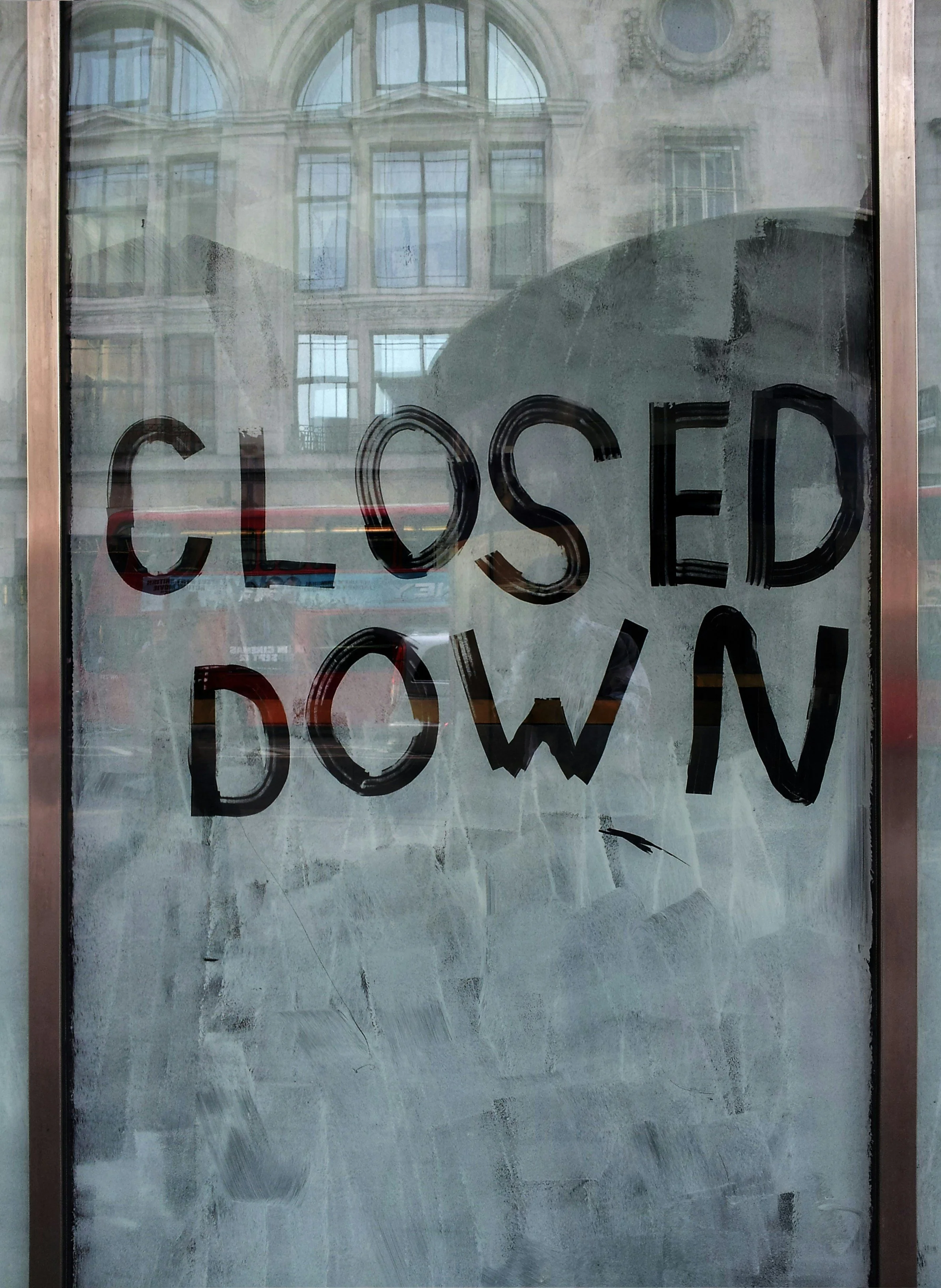
But after COVID, it seemed as if third places were disappearing - clubs, cafés, cinemas, theatres, libraries - shuttered with no sign of re-opening. With the eradication of those institutions came the cries of loneliness - people resorting to online forums for conversation or joining virtual reality games just to see another, albeit digital, human being. We were all expressing valid concerns about our lack of connection and our desire for the reconstruction of our community spaces.
Instead of listening to what we were saying, corporate conglomerates started to monopolise the term ‘third place’ as a marketing tool. Even while researching this article, I stumbled upon co-working spaces detailing the demise of third places, suggesting that their office space (yes, you read correctly) was really a new form of community. In London, there’s even a boutique gym called ‘Third Space’. It’s membership price? £285 a month. Such businesses - exclusive, profit-driven and formal - spit in the face of Oldenburg and Christensen’s definition. Now, you might be thinking, it’s not that deep - and believe me, sometimes, I really wish it wasn’t.
But if we really inspect what these companies are doing, we can see that they aren’t offering a solution; they’re packaging up the root issue underneath their appropriation of community language. What acts as a foundation for the extinction of our third places is the myth of scarcity - that is to say, the idea that everything (from houses, jobs, money, even laughter and conversation) is in short supply and must be tightly controlled and restricted.
This myth even permeates through the most politically liberal spaces, evidenced by a rise in the exclusion of trans women from women-only spaces. Instead of discarding the myth as a perpetrator of divide and oppression, we are buying into it and, in some cases, brandishing it as our own weapon.
But there is still hope. There will always be hope.
In her book, ‘Working Girl: On Selling Art and Selling Sex’ (2023), Sophia Giovannitti proposes the concept of things that are truly “ours” - those that are free from ownership (yes, even owning them ourselves), free from eradication, and most importantly, free from the myth of scarcity. She proposes that what constitutes things that are “ours” is their transient nature, their in-between-ness.
These could be anything: sex, the curtains billowing in the breeze on a sunny day, the foam that sticks in your brother’s moustache after he sips a beer. All things that could be broadly described as art. Perhaps those moments are where we might find respite from the eradication of our third places. Perhaps, it is in those in-between spaces that we can learn how to be truly free - away from the grasp of corporations, politicians, and marketers.
Now, that’s not to say those places should be tucked away, hidden from others. In fact, when I think of what those moments or places look like, the image almost always includes another person. But what sets them apart is their inability to be commercialised. As much as society would love to put a price on people-watching or laughing with someone you love, or even the way we express our story through art, it can’t. Because to do so would dampen their meaning, to do so would make the product completely un-marketable.
There’s another memory that stands out to me as a kid. I was eight or nine, standing amidst an envelope of trees, the foliage crunching underneath my wellington boots. I was surrounded by children, all laser-focused on the task at hand. That task? To build our first-ever stick den.
We dug holes with each of the branches, sticking them into place with the thick, dark mud. I remember getting a splinter - a girl next to me helping me squeeze the broken wood out of my index finger. There was something special about that moment, all building a temporary haven, all curled up under twigs and logs that we knew would gradually decompose, re-entering the earth below, feeding it bit by bit. As I lay there, I could just make out a group of blackbirds in the neighbouring tree and a pair of squirrels running up the oak’s spine.
Sometimes, when I walk through Epping Forest now, I see remnants of past stick dens - memories of laughter and creativity amongst the fallen leaves. When I do, I like to imagine a bunch of children, looking straight down the lens of a camera - fearless and brave.

References
Giovannitti, S. (2023). Working Girl: On Selling Art and Selling Sex (pg. 153). London: Verso Books.
Oldenburg, R. (2023). The great good place: cafes, coffee shops, bookstores, bars, hair salons, and other hangouts at the heart of a community (2nd ed.). Great Barrington, Massachusetts: Berkshire Publishing Group LLC.