
Anxiety in an Uncertain World: A Counselling Perspective
Economic instability, social fragmentation, political volatility, climate concern, and the relentless pace of information, together have created a context in which many people feel persistently unsettled.
By Featured Writer, Michelle Smith.

Anxiety is increasingly being experienced not as an isolated clinical presentation, but as a relational response to the world we currently live in.
I’m finding within the counselling room, more and more clients are carrying not only personal histories and internal conflicts, but also the cumulative weight of global uncertainty. Economic instability, social fragmentation, political volatility, climate concern, and the relentless pace of information, together have created a context in which many people feel persistently unsettled.
Anxiety, in this sense, I feel, is not merely an individual pathology but a meaningful response to prolonged ambiguity.
From a counselling perspective, it is important to locate anxiety within this wider relational and environmental field. Anxiety is, at its core, a protective response, a nervous system attuned to threat and seeking safety, predictability, and coherence. In uncertain conditions, this system understandably becomes more vigilant. Many clients describe this, not as a fear of a specific event, but a pervasive sense that the future is unreliable and that familiar reference points no longer hold.
In practice, this often emerges through themes of hypervigilance, difficulty making decisions, a sense of being “on hold,” or an underlying grief for a life that once felt more predictable. Clients speak of exhaustion, emotional numbing, or a loss of confidence in their ability to plan or trust their own judgement. These experiences are frequently accompanied by feelings of shame, a belief that they should be coping better, particularly when uncertainty is framed socially as something to be endured or overcome.
Within the therapeutic relationship, I’m finding that it’s not about eliminating the uncertainty, but rather helping clients develop a different relationship with it. How I work is through the person-centred and relational approach, offering a valuable framework through the provision of consistency, empathetic understanding, and non-judgement. Counselling can become one of the few environments in which the client experiences psychological safety amid external instability. The relationship itself, therefore, offers a reliable, present, and responsive environment, which can effectively counter this stress.
A key feature of anxiety in uncertain times is the drive toward control. When external conditions feel unpredictable, clients often attempt to regain safety through cognitive strategies such as over-analysis, over-thinking, constant planning, or rehearsing worst-case scenarios. While these strategies are understandable, they frequently intensify anxiety rather than soothe it. Counselling gently invites the exploration of this pattern, to see it not as a flaw, but as an adaptive response that may no longer serve the client.
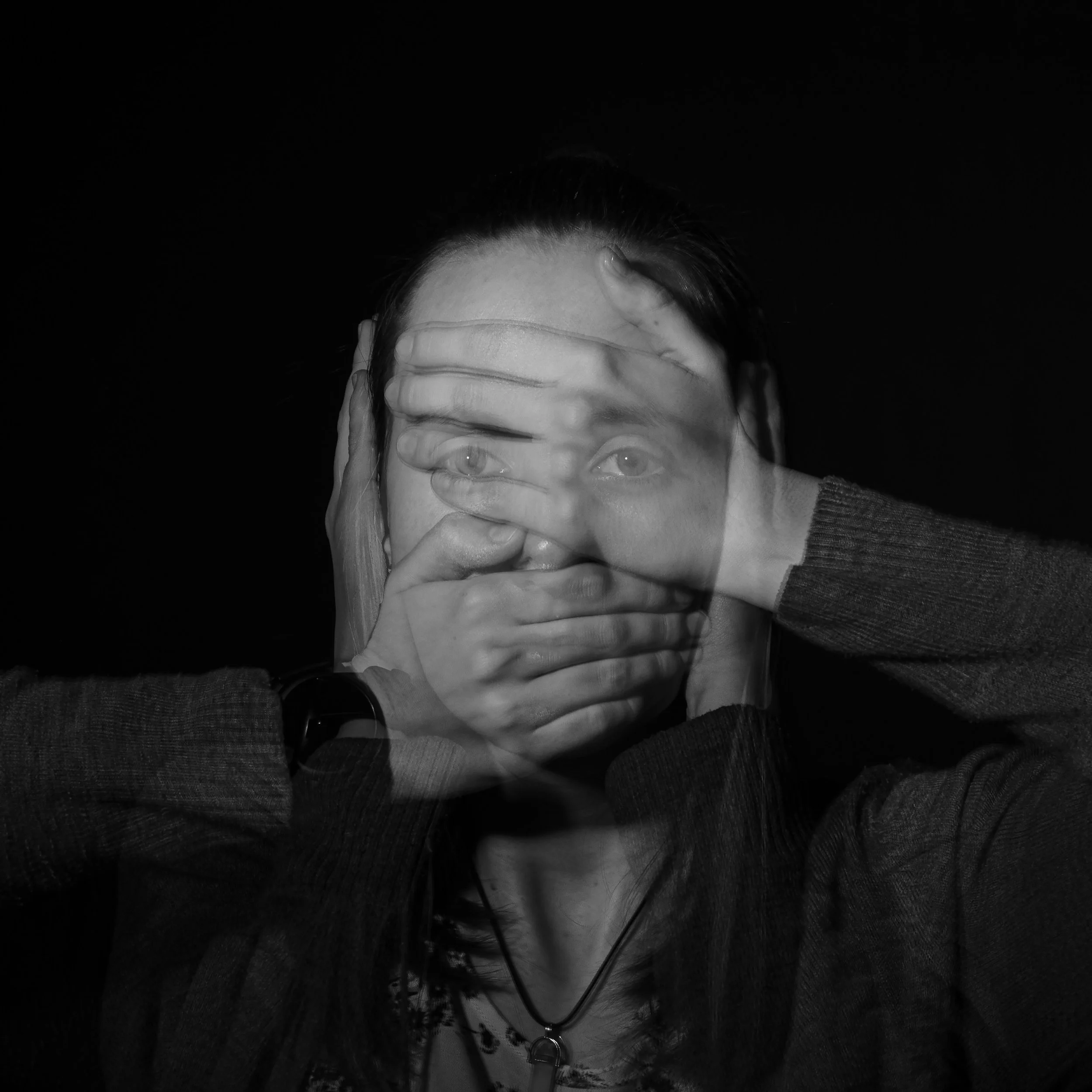
Therapeutic work in this context often involves a subtle shift in focus away from certainty of outcome and toward strengthening internal and relational resources. Rather than asking, “How do I make this anxiety stop?” a counsellor will invite reframing, turning things around and equipping the client to reflect on: “What helps me feel anchored when the future feels unclear?” This shift supports clients in reconnecting with agency, not through control, but through choice and self-trust.
Anxiety frequently reflects unmet needs for clarity, security, and freedom. Importantly, these things are not synonymous with certainty. Clarity can involve reconnecting with values rather than answers. Security can be found in relationships, boundaries, and embodied regulation rather than external guarantees. And freedom may emerge through increased flexibility and responsiveness, rather than the absence of threat. Counselling provides a space to explore these needs at depth, allowing clients to identify what genuinely supports their sense of safety and autonomy.
From a counselling lens, it is also essential to recognise the impact of prolonged uncertainty on the nervous system. Many clients are not experiencing acute anxiety episodes, but rather a low-level, chronic state of activation. Psychoeducation, when offered relationally and sensitively, can help normalise these responses and reduce self-blame. Understanding anxiety as a nervous system response to sustained ambiguity can be deeply relieving for clients who have internalised the belief that something is “wrong” with them.
Ultimately, anxiety in an uncertain world invites a reframing of therapeutic goals. Rather than striving for a return to a sense of certainty that may no longer be realistic, counselling can support clients in cultivating resilience, self-compassion, and relational safety within uncertainty. This does not minimise distress; rather, it acknowledges reality while strengthening the client’s capacity to meet it.
In this way, anxiety becomes not only a symptom to be managed, but a meaningful signal, pointing toward the human need for connection, understanding, and stability in a world that often feels anything but stable. Counselling offers a place where these needs can be met, named, and gently integrated, allowing clients to move forward not because uncertainty has resolved, but because they no longer face it alone.