
Self-commodification wouldn’t be possible without the culture of insecurity that late-stage consumerism perpetuates - one that I had been internalising for years. With that insecurity came a desire for a poorly defined love, one that echoed the toxic relationships I grew up around.
By Cordelia Simmons, Featured Writer.
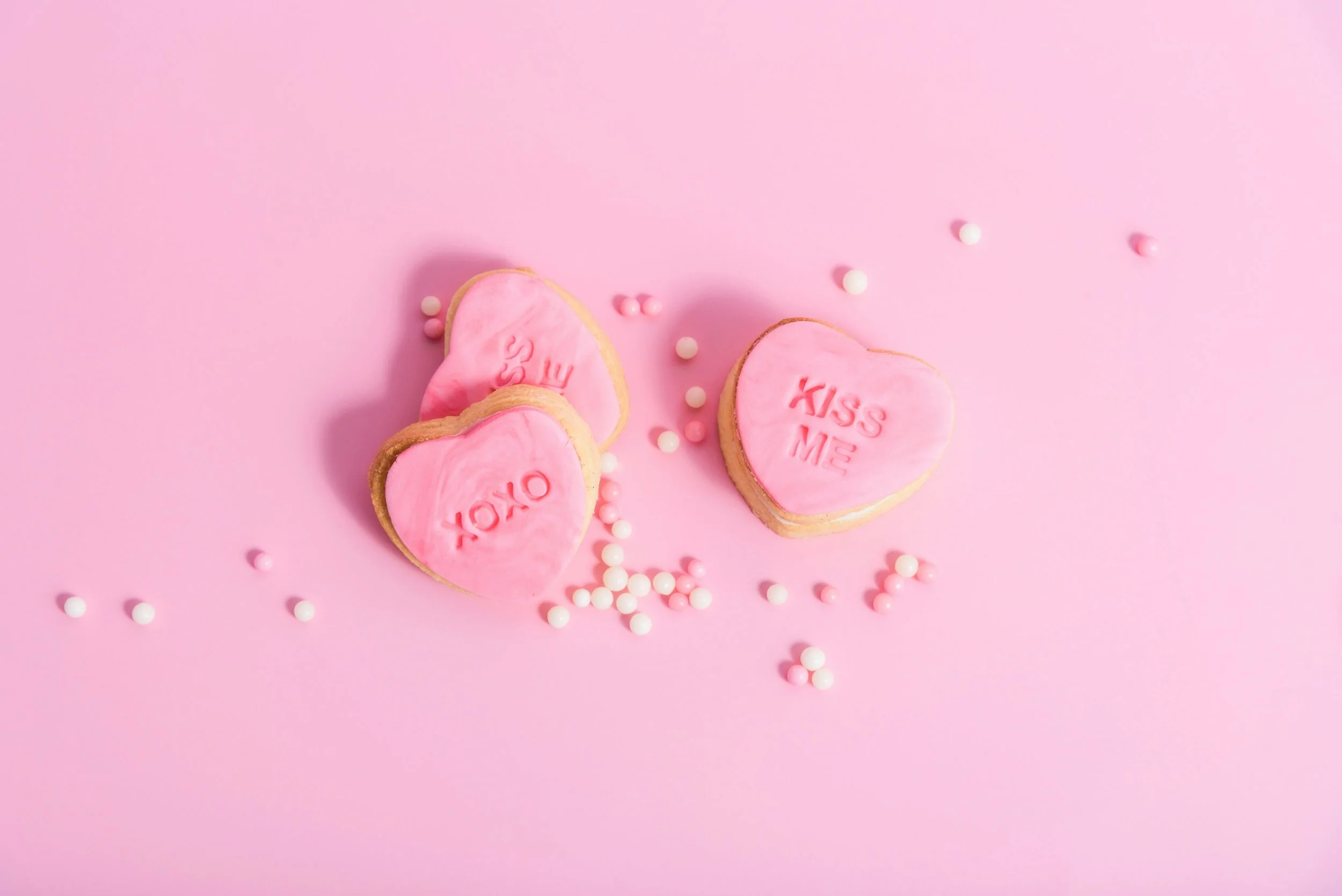
The first Valentine’s Day I remember was when I was eighteen. My then-boyfriend wrapped up a book, ‘How to Fix Your Relationship With Your Mother’ in this bright red paper with sparkly hearts.
“You’re joking, right?” I asked, looking around the cafe filled with couples holding hands in that adolescent, sexually charged way. “Why would you get me this?”
He shrugged.
“I have a good relationship with my Mum. You should too! I want that for you.”
I stood up, shoving my chair back so quickly it let out a sharp shriek.
As I picked up my coat, I hissed my comeback.
“You kiss your Mum on the lips!”
Suffice to say, we didn’t go out for much longer.
My relationship to love has always been a tricky one. As a kid, love just seemed like a performance - Noah from The Notebook declaring his love for Allie in the rain, Harry yelling at Sally in the middle of that New Year's Eve party. My parents liked to perform it too - singing my praises in public while giving me detailed notes on how to improve myself behind closed doors. Sometimes, it felt like the only time they were proud of me was when there were other people to revel in their adoration. But that didn’t stop me from falling for it. Every time. It was as if my dreams of winning an Oscar were coming true. Me. The golden child. Finally, I’d done something right.
As I got older, their roles were rarely reprised, and I became desperate for an encore. “I love you,” my Mum would say. “But I don’t like you very much.” I knew I’d done something wrong. I just needed to work out what. Maybe it was my grades. Maybe it was the way my hair fell. Maybe I was just one of those people that no one could ever love. I needed to do better.
Love was just a market: supply and demand. If the customer isn’t happy, they’ll shop elsewhere. Keep your customers’ interest piqued, and you’ll have them for life. Well, at least until a better model comes along.
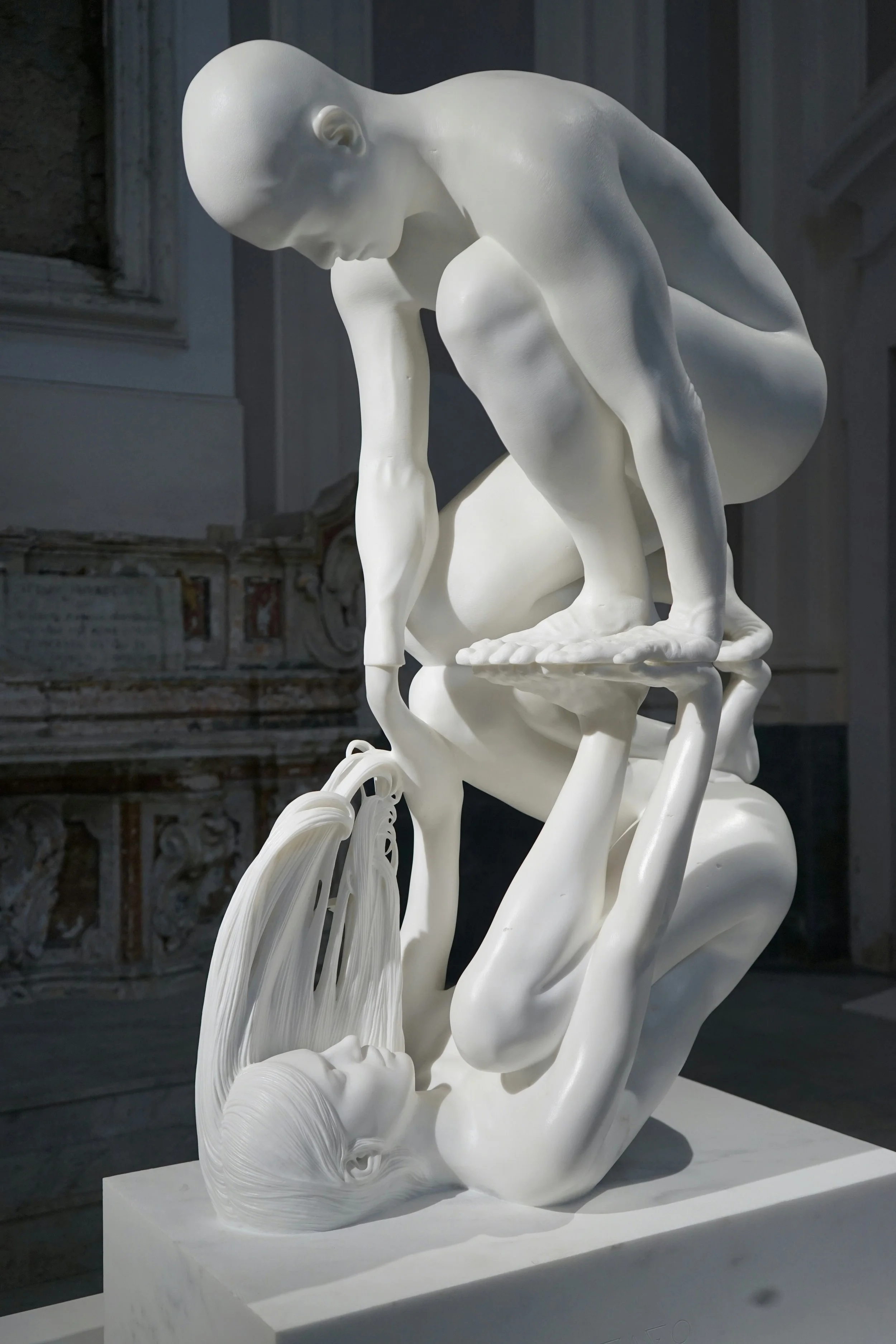
My use of dating apps in my early twenties only reinforced this sentiment. The more swipes, the more potential. To stand out in such a saturated pool of competitors, you had to come with a value-add: bilingual, ex-gymnast, generational wealth. And if you didn’t have that, you were doing something wrong. But don’t worry, countless Instagram dating coaches could teach you exactly how to change yourself. For £100 an hour, of course.
Seeing yourself as a product to enhance may seem like simple self-improvement, but this branch of self-commodification has paved the way for bizarre and outright dangerous social media trends. The most frightening of these is ‘looksmaxxing’- a term denoting the often self-mutilating practice of improving your physical appearance, which is practised mostly by young men (Hunt, 2026). Videos online depict teenage boys attempting to carve their jaws with hammers, or even micro-dosing methamphetamine to get chiselled cheekbones. All to stand out from the competition.
I knew my flaws: needy, sensitive, dramatic. With every date, I got better at hiding anything that might signal imperfection. Wait two days before replying. Lie and say you’re busy. The game became exhausting and I was left feeling flat and misunderstood. Just like the movies I grew up watching, my quest for love had become just another performance. But when inauthentic, performance becomes exhausting, and you fade into the role.
Self-commodification wouldn’t be possible without the culture of insecurity that late-stage consumerism perpetuates - one that I had been internalising for years. With that insecurity came a desire for a poorly defined love, one that echoed the toxic relationships I grew up around. Throughout my early twenties, I sought out relationships that were fuelled by resentment and manipulation, ones that reminded me of my parents. I wanted those fleeting moments of adoration. And I was happy to pay the price, a price that usually meant being belittled or humiliated. But I knew somewhere down the line I might get an extravagant apology or a dramatic declaration of love. And that was all that mattered.
Underneath that insecurity was the fear of being known - of anyone seeing who I was beneath the surface. The mask was comfortable and I didn’t want anyone seeing it for what it was. What if someone saw the cracks? I knew what could happen. Just because the product was people, doesn’t mean we couldn’t get dumped and upgraded for a better model.
After a particularly bad breakup, I decided that instead of re-downloading the apps, instead of recalibrating my personality, I’d spend some time getting to know myself again. I started dreaming again. I started writing again. By the time I met my current partner, I wasn’t so interested in the mask. Nor was he. On our first date, I told him the truth without thinking. It was like someone was speaking the lines for me. I remember journaling something after the first time we said I love you: He makes me feel the way I know I am.
Six years later, for our most recent Valentine’s, we decided to plan each other a whole day as a complete surprise. The night before mine, I thought back to my teenage ex-boyfriend and that smug look on his face - that misguided knowingness. There was a niggle in my brain: that wouldn’t happen again, would it?
In the morning, there were no cards with empty words, no meaningless flowers and definitely no self-help books. It was a day filled with all my favourite things: the cinema, book shops, and tonnes of food. I couldn’t have planned it better myself.
A few days later, I found a note my father wrote to me as a kid:
“I will always love you. No matter where you are or what you are doing.”
Below that, he laments how my sensitivity gets the better of me, that my tendency for the dramatic causes tension in the house.
As I read it, I texted my partner:
“I think he did love me. But not in the way I want. I want love that makes me feel the way you do. Like I’m understood.”
In a recent session, my therapist asked me when the last time I felt love for my partner was.
“Probably the last time we swam together. Even though we were in different lanes, it’s like our bodies were moving in synchronicity. Like he knows me so well, he knows exactly what I’m doing next.”
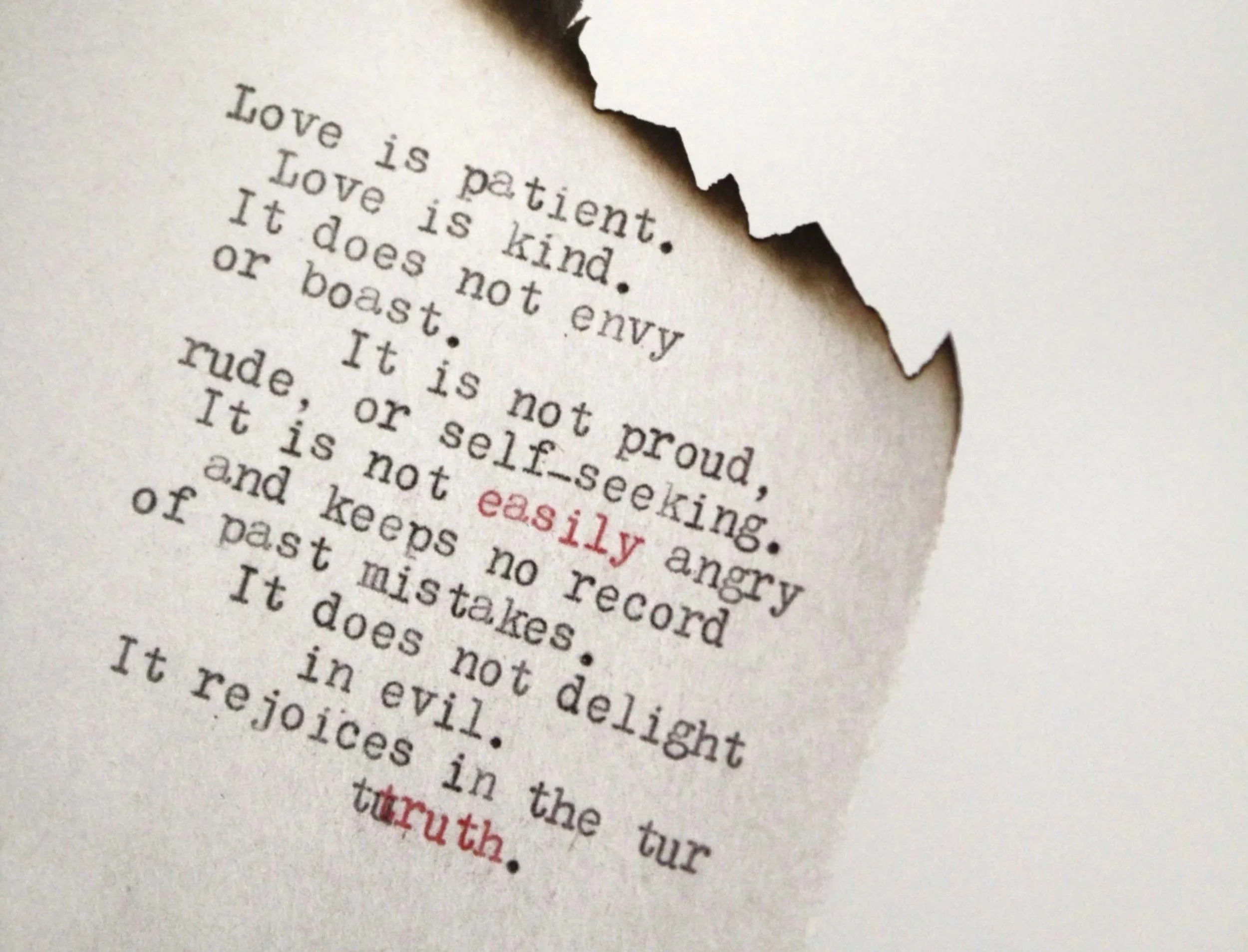
I don’t want to be a brand or a product. I just want to be seen - swimming in different lanes, moving together as one.
References
Hunt, E. (2026) The disturbing rise of Clavicular: how a looksmaxxer turned his ‘horror story’ into fame, The Guardian, 18 February. Available at: https://www.theguardian.com/society/2026/feb/18/foid-looksmaxxer-manosphere-influencer-braden-peters-aka-clavicular (Accessed: 28 February 2026).