The Saturation of Self-Care
My first introduction to self-care was in my early twenties through Instagram. Influencer after influencer started sharing their self-care tips and the impact of their practices on their emotional stability - but the solution can’t be sold.
By Cordelia Simmons, Featured Writer.
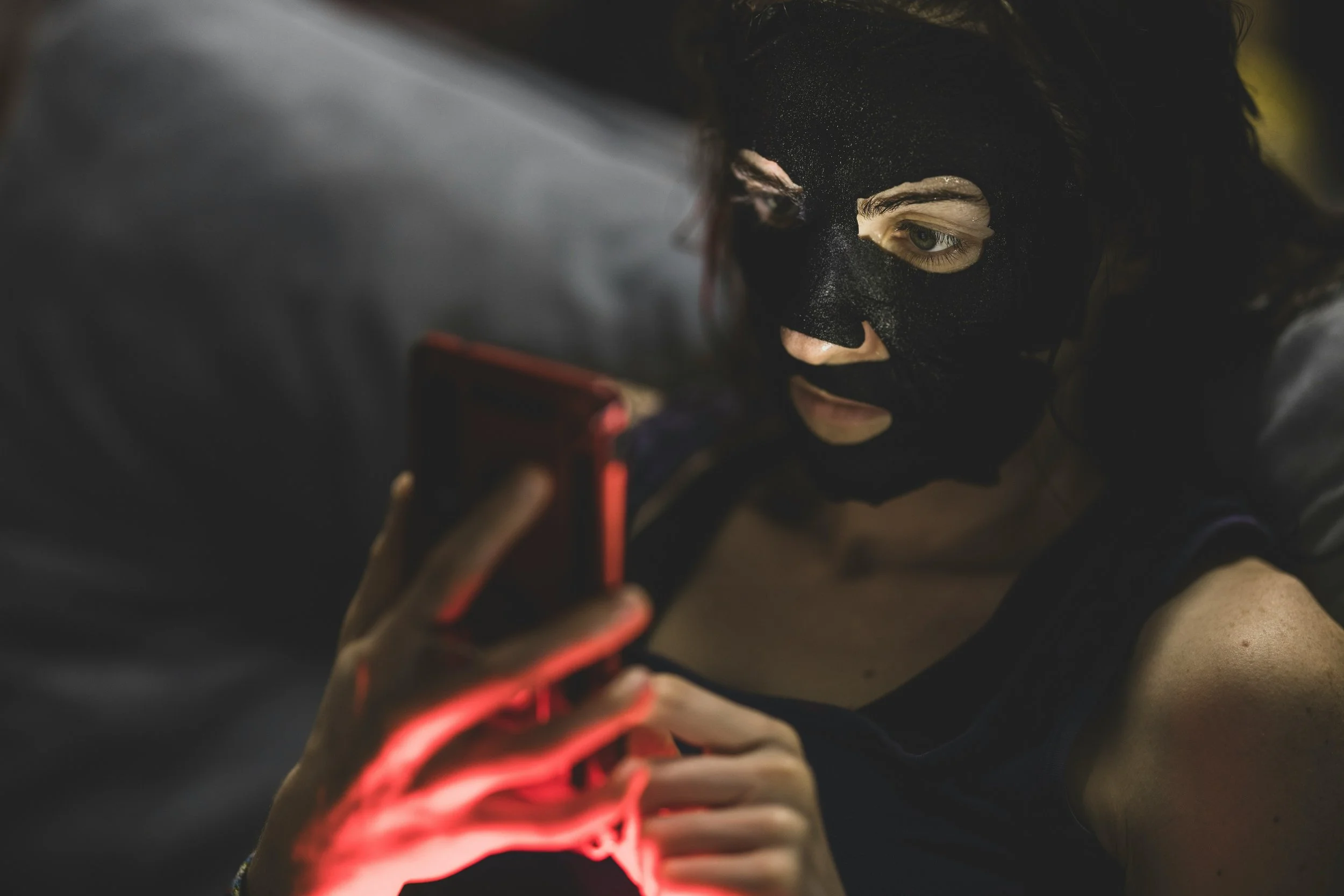
It’s Saturday night. The afternoon drinkers on the streets of Shoreditch get louder with every laugh, every greeting. I’m lying in darkness, my dog’s head resting on my arm. The week had been challenging - several difficult conversations compounded by the general despair at the days ending at 4pm. My phone buzzes with a text - “Can you pick us up some drinks on the way?” I groan, knowing I was meant to leave ten minutes ago for dinner at a friend's house before my mood had gotten the better of me.
There was a knock at my bedroom door as my boyfriend entered - the light from the hallway turning his glasses all sparkly.
“Do you wanna cancel?” he asked. “I know it can be hard to see people when you’re like this.”
I pictured my evening if I said yes - a night filled with reruns of ‘Below Deck’ under the duvet and a fervent replay of every embarrassing thing that had happened that week. If I did a facemask and lit some incense, I could even call it an act of self-care. There was something tempting in the scene - maybe the prospect of not having to take my pyjamas off to put on a pair of trousers, with buttons! The thought made me wince.
My boyfriend sat down on the bed and started playing with the corner of the duvet - a habit of his that came out when he was anxious.
“Ooooor,” he continued. “We could still go. Might be good to get out the house. Be around people. They always make you laugh.”
This option was scary - show my face to two of my favourite people while feeling like this. Have my friends perceive me? There’s no way I could do it.
“I think it will be nice,” my boyfriend finished. “And we can leave early if you need. They’ll understand.”
Convincing myself that he was twisting my arm, I started begrudgingly getting out of bed.
“Fine, I’ll do it,” I said. “But I’m wearing fucking sweatpants.”
He laughed before turning the lights on.
Forty minutes later, I walked through my friends’ front door - the smell of coriander and the sound of jazz from the kitchen helping my shoulders loosen up. It wasn’t long before I was cracking jokes as my friend roasted acorn squash, the warm amber of the oven making her skin glow. We spent the whole evening together - planning a trip to Thorpe Park while she crocheted next to me.
As we got into bed, my boyfriend wore a smug look before turning on his book light.
“I told you it would make you feel better,” he said.
My go-to was to remain reluctant in admitting any defeat, but I knew he had been right. I wondered how I might have felt if I had turned him down, committing myself to an evening of ‘self-care’. What even was self-care anymore? I saw the term in ads for everything - skincare, Headspace, clothes - pretty much any product that Instagram wanted to sell me. Social media told me that self-care was all about boundaries, nights in, and early mornings spent cleaning your apartment. As I lay there, I wondered if I was starting to become disillusioned with that diluted definition, craving another version that wasn’t so tied to marketing.
My first introduction to self-care was in my early twenties through Instagram, around the time the site was inundated with graphics telling us: It’s okay, not to be okay. Conversations around mental health were, rightly so, becoming more prevalent in the zeitgeist. It wasn’t uncommon for celebrities to speak openly about their mental health struggles, or for communities to form online, sharing tips and advice. As someone who had struggled with mental health for years, often feeling stigmatised for my symptoms, I welcomed the shift.
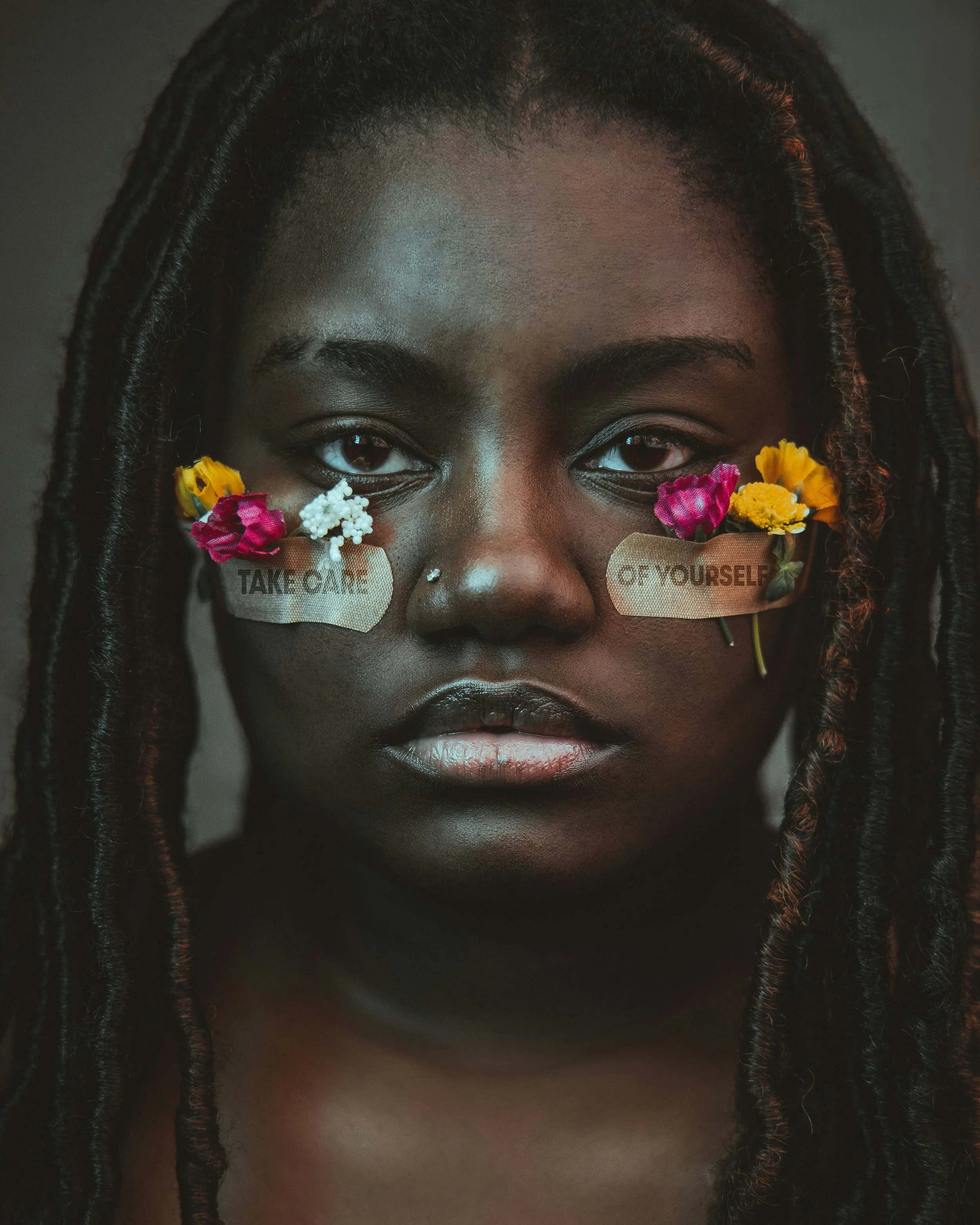
Soon enough, the messaging around mental health became inextricable from that of self-care. Influencer after influencer started sharing their self-care tips and the impact of their practices on their emotional stability. ‘Sunday Reset Vlogs’ told me to keep the whole day free to hoover and journal. ‘Evening of self-care’ videos showcased women sitting alone at home, drinking Kombucha from a wine glass and reading ‘Atomic Habits’. Some tips were productive - get enough sleep, see a therapist, move your body - but the majority of videos were just lists of products to spend money on. Once a restorative act, it seemed self-care had evolved into something predominantly fuelled by marketing.
Around this time, ‘boundaries’ became the new buzzword - the practice of setting personal limits and rules in order to protect your wellbeing. It goes without saying that boundaries, in their purest sense, should be encouraged. Boundaries helped me raise my standards for romantic relationships and friendships. They helped me reflect more on what made me truly happy. They helped me walk away from relationships that weren’t good for me.
But after a while, I started to notice my boundaries becoming more dogmatic, refusing to engage in anything that might, for a second, increase the likelihood of my feelings being hurt. I stopped going to parties lest I have an awkward conversation with someone. I started cancelling on my friends, telling myself that after a long day of work, all I needed was to be alone. Initially, I thought what I was doing was best for me, but my evenings were often spent alone, doom-scrolling, wondering why I didn’t feel creative or inspired. Inevitably, that solitude made way for loneliness. I lamented in my journal that no one would ever understand me, that I needed to do whatever I could to ‘protect my peace’. I became obsessed with categorising every emotion, every thought into a neat, tidy box: insecure attachment, fear of commitment, or my favourite, the classic trauma response.
My rules were clear:
Don’t fly off the handle;
Keep your circle small (Remember, there’s nothing sexier than a woman with a small circle);
Prioritise yourself;
It’s okay to be selfish if it means you’re tapping into your greater purpose.
It became, somewhat paradoxically, exhausting to spend every waking moment attempting to manufacture a life completely devoid of irritation - of annoyance. I craved messiness. I craved untidy thoughts. I craved losing control. I wanted to get angry, to scream, to cry, to fight. I wanted to feel crazy, even for a second. As CultureCraft writes in ‘Healing is Making Us Mean’, it seemed recovery had become more about control than connection.
After a sudden redundancy, my life, inadvertently, became a total mess. I slept till 10. I ate one meal a day. I had no choice but to completely let go. With that change came a realisation that I didn’t want to be selfish anymore. I didn’t want to keep cancelling on my friends. Phone calls, coffees, cocktails - they were the only things keeping me going. Around the same time, I took up boxing - a sport that helped me release my strict categorisation of emotions. In the ring, I couldn’t tell myself I was angry because of a trauma response. I was just angry. I stopped watching Sunday Reset vlogs, instead spending my Sunday evenings at friends’ houses, eating home-cooked food and watching crappy TV. It was the most I’d looked after myself in years.
In his book, ‘McMindfulness: How Mindfulness became the new capitalist spirituality’, Ronald E. Purser, a Buddhist teacher, discusses how the rich, spiritual concept of meditation has been stripped of its ethical and social justice roots by corporations to encourage self-pacification and isolation. The ultimate goal? To dispel community spaces for conversation, healing and revolutionary thought.
Anger and sadness are political, Purser says, and by succumbing to the call to extinguish those emotions, we weaken their potential. Throughout the book, he uses examples of workplaces running mindfulness sessions to help you manage extreme workload better without ever acknowledging the oppressive structures that are making people burnt out, or the army using mindfulness to prepare soldiers for ‘optimal performance’ while shying away from why these wars are being perpetuated. For me, I was using my Headspace streak as a way to avoid asking myself the scariest question of all: why was I still unhappy?
Whilst Purser doesn’t touch on self-care or boundaries specifically, his thinking, I believe, is applicable here. Boundaries are important. Understanding ourselves is important. But so are making mistakes, embracing community and the conflicts that sometimes come with that. It is within conflict that we learn the most about each other. With each difficult conversation, our values become clearer, our self-actualisation stronger.
The thing is, self-care was never meant to be about isolation, let alone £20 face masks and scented candles. In fact, one of the most apt definitions comes from the black, revolutionary writer Audre Lorde. She speaks of it as a political act of warfare - an active choice to say screw you to the systems that are responsible for our unhappiness. Contrary to what BetterHelp will try and tell you, stress and upset aren’t individualised problems - they are a result of the systems doing their utmost to keep us down.
For those systems, a reaction that can’t be categorised is the scariest of all because, without that label, Instagram wouldn’t be able to sell us the solution. In the current climate, community is at its most vital - talking to each other, listening to each other, learning from each other. Because, as Lorde puts it: ‘Without community, there is no liberation’.
Choosing community on that Saturday night came with a risk, a risk of upset, a risk of annoyance, just by virtue of it involving other people. It will always come with that risk. But, in taking that risk, I chose to take care of myself by ultimately opening myself up to the care of other people.
If I were to write some new rules, maybe they’d look something like this:
Allow yourself to feel anger - not the aggressive kind, the powerful kind. It might just set you free;
Keep your circle full of loving people, no matter how many there are;
Prioritise happiness, not solitude;
Being selfish isn’t a good look. Being open suits you better.
References
CultureCraft. 2025. Healing Is Making Us Mean [online essay]. (Accessed: 29 November 2025).
Lorde, A. 1984. ‘The Master’s Tools Will Never Dismantle the Master’s House.’ In: Sister Outsider: Essays and Speeches. Trumansburg, NY: Crossing Press, pp. 110-114.
Lorde, A. 2017. Your Silence Will Not Protect You: Essays and Poems. London: Silver Press.
Purser, R. E. 2019. McMindfulness: How Mindfulness Became the New Capitalist Spirituality. London: Repeater Books.